)
)
How Oracy Drives Writing Progress
With the arrival of the Curriculum and Assessment Review at the start of November 2025, we now see plans are in place to build an ‘oracy framework to support practice and to complement the existing frameworks for Reading and Writing.’
Here at The Literacy Company, this is music to our ears. Learning how to talk with confidence and purpose, and listen actively to others is the key to opening doors in life. It is widely recognised that oracy affects young people’s life chances, relationships and mental health. Yet, for too long, there has been a lack of clarity around the progression of skills leading to inconsistency in terms of classroom practice and outcomes. Therefore, it is essential that oracy takes centre stage across the curriculum so that ‘young people benefit from a skill that will help them at every stage of their lives.’
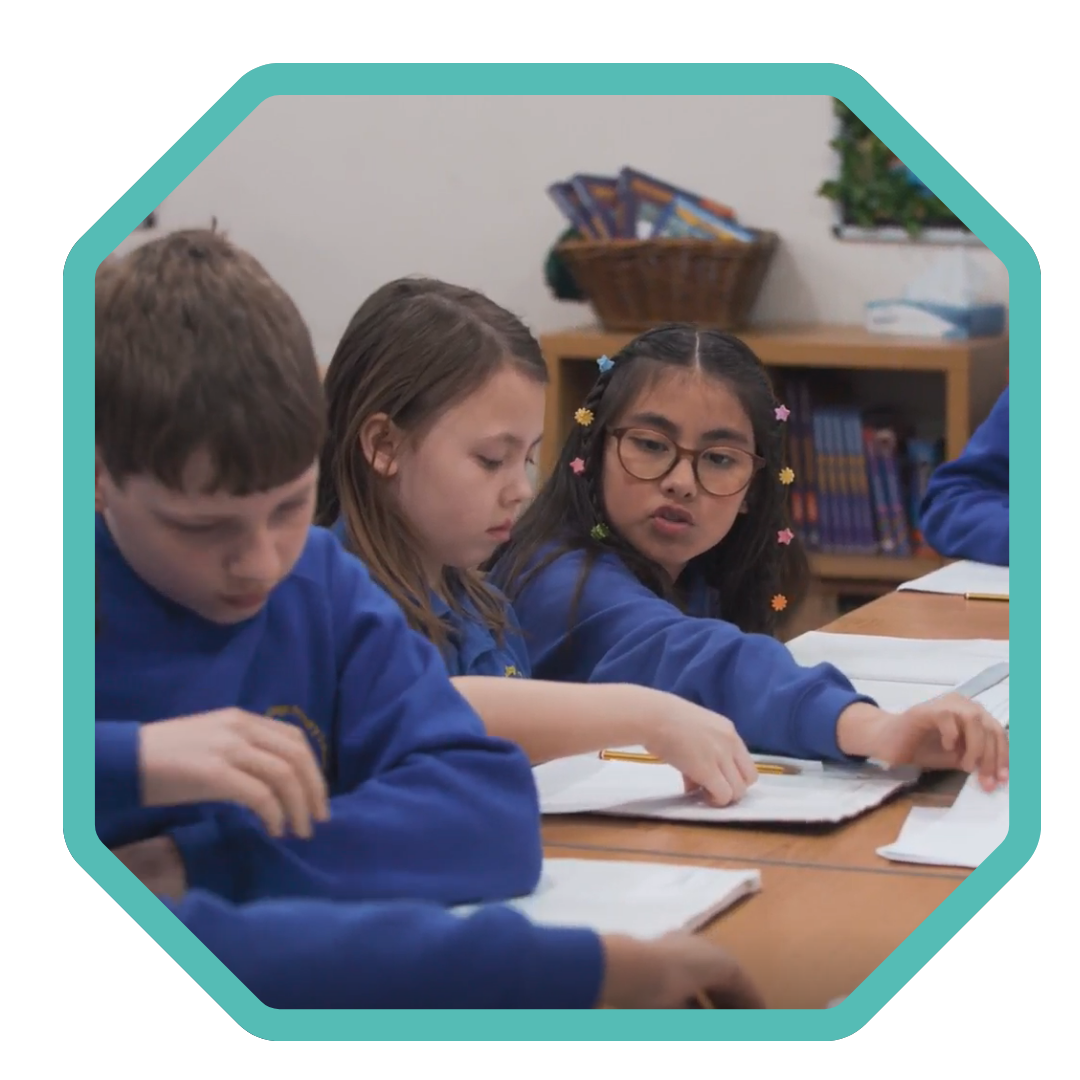
Over the years, teachers have skipped drama, role-play and oral rehearsal, keen to have evidence recorded in books and writing outcomes completed. However, in rushing to write, we miss an important step, and the writing is poorer for it. Pupils need to discuss and explore ideas, select what to write about and the order to follow. They then need to orally rehearse their sentences before committing them to paper. When given this opportunity alongside clear skills or vocabulary to practise, it allows pupils to master these and will ensure they use these in their writing. At EYFS, this is taken for granted and built into their every-day practice. Why are we so quick to miss this step as pupils move through the school?
Within Pathways to Write, oracy opportunities are weaved into our sessions in all year groups. Units always start with discussions, encouraging pupils to ask questions, predict and infer with partners. Little needs to be recorded here. The focus is on promoting conversation and giving them a reason to write later.
Throughout the Pathway, we ask questions to encourage responses to the books. There are role-play and drama opportunities planned in. Activities like Rally-Robin, Conscience Alley and Define the Space allow pupils to build their confidence in putting ideas forward and using grammar skills orally to extend sentences or justify reasons. For more techniques for incorporating drama and role-play in the classroom, download our booklet. (https://www.theliteracycompany.co.uk/how-oracy-drives-writing-progress/)
When teaching sentence structure, we recommend sentence strips so that pupils can have a go at building, extending and manipulating sentences accurately with support from a partner.
Our Writeaway promotes discussions around model texts, asking pupils to work collaboratively to find the genre features within quality texts before planning their own. Again, little writing is expected here. It is the guided conversations that will have the impact on writing afterwards. And in terms of revising and editing, nothing works better than working in partners to hear each other’s writing aloud and suggest improvements alongside clear success criteria.
So, we are thrilled to hear that the government intends to give oracy greater prominence in the curriculum. And schools using Pathways to Write can feel assured that there are already plenty of opportunities and activities planned in to accommodate this recommendation.
Quotes taken from Curriculum and Assessment Review: Building a world-class curriculum for all, November 2025 – view the full document here.(https://assets.publishing.service.gov.uk/media/690b96bbc22e4ed8b051854d/Curriculum_and_Assessment_Review_final_report_-_Building_a_world-class_curriculum_for_all.pdf)